Tycoon Game Concept to Playable Prototype Without Coding
AI tools can now build tycoon prototypes in one session if you understand the genre first.

A playable tycoon prototype is a realistic one-session project now, as long as the person building it understands how the genre actually works before typing a single prompt. This piece lays out the three mechanics every tycoon game runs on, what AI tools do well versus what still needs a human hand, and how studs.gg turns a plain description into a working game without installs or code.
Why tycoon games reward careful genre thinking before you open any tool
Tycoon games look simple from the outside. Click a thing, watch a number go up, buy an upgrade, watch the number go up faster. That simplicity is the trap. Every tycoon game, from the smallest hobby project to the biggest hits in the genre, runs on three mechanics working together, and knowing what they are before you open an AI tool is what separates a real game description from a vague vibe.
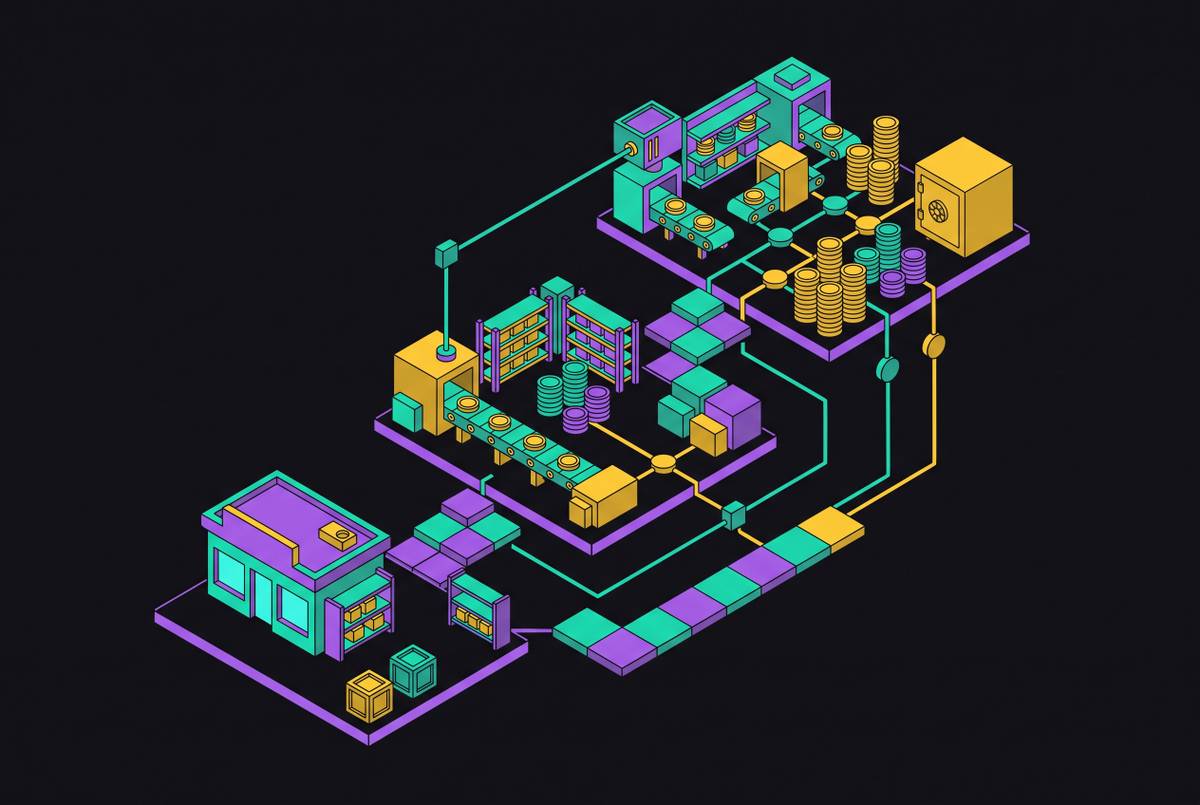
The first mechanic is the income loop: something generates currency, either automatically over time or when a player interacts with it. Think of the classic "dropper" setup, where an object spits out coins or resources at a set rate. The second mechanic is the upgrade curve: that currency buys improvements that make the income loop faster. A faster income loop generates more currency, which buys bigger upgrades. This compounding is what makes tycoon games addictive. The third mechanic is idle logic: the game keeps earning even when nobody's clicking. This is the real line between a tycoon game and a simple clicker. A clicker needs you. A tycoon game works while you're getting a sandwich.
These three mechanics are the stable genre conventions that every successful tycoon game builds from, whether it's a scrappy project with a few thousand visits or a juggernaut with hundreds of millions. What separates a forgettable tycoon game from a great one is theme and economy design layered on top of a structure that already works. Translation for anyone sitting down to build one: skip trying to invent something new under the hood. Focus on dressing up the loop and tuning the numbers so they feel satisfying, because that's the part an AI tool can genuinely help with, as long as you describe it clearly.
AI-Assisted Creation and Tycoon Mechanics
AI prompt-to-game tools can build a working tycoon structure from a plain description, and that's genuinely useful. Treat whatever comes out as a first draft, not a finished product. That approach puts your session to good use instead of wasting half of it wondering why the numbers feel off.
Start with what these tools handle well. Describe droppers, collectors, and upgrade buttons in plain language, and the tool places them in a scene. Basic event logic, like "when the player touches this button, add currency and unlock the next dropper," gets wired up without anyone touching a line of script. The jump from idea to something visible and clickable, a process that used to eat entire days of setup work, now takes minutes.
The middle ground is where a creator's input starts to matter. AI can generate an upgrade curve, but the default numbers are generic. Someone who says "slow early, explosive late" gives the tool a feel to aim for instead of a blank guess, producing a noticeably better result. Idle logic works the same way: basic offline-earnings can be generated as a starting stub, but getting the idle rate to feel right against the active-play rate takes a few rounds of tuning that the creator has to drive.
Then there's the part no tool hands you for free. Difficulty balance and save-system design still need a person to test whether the upgrade curve feels rewarding or just frustrating. UI scaling and collision edge cases need manual testing passes even when the underlying logic generated without a hitch. Monetization design, the choices that make a tycoon game worth returning to, comes down to decisions a person makes, not something a prompt spits out.
None of this blocks a first prototype. Complex multiplayer systems and advanced AI enemy behavior will eventually need real code behind them, but a single-session tycoon prototype doesn't ask for either of those things. The ceiling exists, but it's further down the road than most people worry about on day one.
The studs.gg Tycoon Creation Workflow
studs.gg removes the two things that usually stall a first-time tycoon creator before they even start: installing software and staring at a blank project wondering where to begin. The whole flow runs in a browser. Type a description of the game, and the tool builds it, no engine download, no project setup, no scripting required. The only thing you need walking in is a clear idea of what the game should do, which circles right back to knowing the three mechanics from the first section.
studs.gg handles design, 3D building, scripting, and testing on its own. The income loop, the upgrade curve, and the idle logic, the three pieces covered above, can all be seeded from a single description. That's the practical payoff of genre literacy: once you know what those three mechanics are, you can ask for all three in a single message.
Access is free to start, with a paid plan available for anyone who wants more usage as they keep iterating. More than 100,000 creators have used the platform already, including plenty who had never written a line of code before. That's a useful signal for anyone wondering whether a single-session tycoon prototype is a reasonable goal or wishful thinking. It's reasonable. Tycoons sit alongside obbies, simulators, shooters, horror, sports, and party games on the list of genres the tool supports, making a tycoon prompt one of the standard requests the tool is built to handle.
Writing a prompt that produces a usable tycoon starting point
The quality of a generated tycoon prototype comes down almost entirely to how specific the opening prompt is about three things: the income loop, the upgrade structure, and the theme. A vague prompt gets a generic result, and fixing a generic result takes more follow-up work than writing a clear prompt in the first place would have.
A strong tycoon prompt covers five things. Theme comes first: the setting that skins the mechanics, whether that's a restaurant, a military base, a factory, or a space station. Theme is the differentiation layer, and it shapes how the generated assets look and feel. Next is the income source: what produces currency, and how. An automatic dropper every few seconds? Player-collected stations? Pure idle accumulation? Third is the upgrade structure: what can be bought, and what it actually does. "Buying a second oven doubles food output." "Upgrading the dropper increases the drop rate." Fourth is idle behavior: does the game earn while the player's away, and at what rate compared to active play? Fifth is the progression signal: what tells the player they're making progress, whether that's unlocking a new zone, hitting a currency milestone, or triggering a prestige reset.
"Make me a tycoon game" hands the AI nothing to work with. "Make a restaurant tycoon where customers arrive frequently, each table earns a set amount of coins, and players can buy a second dining room that doubles earnings" hands the AI an income rate, an upgrade, and a theme in one shot. Same genre, wildly different starting point.
Treat the first output as a draft. Check which of the three mechanics, income, upgrades, idle logic, came through correctly, and send a follow-up prompt to fix whichever one didn't. That loop, generate, check, adjust, is faster than trying to write the one perfect prompt that nails everything on the first try. Nobody writes a perfect prompt on the first try. That's fine.
Testing and tuning the generated prototype in the same session
A generated tycoon prototype isn't done the moment it loads. It still needs a quick pass to confirm the three mechanics actually work together, and that pass takes minutes, not hours, since none of it involves touching code.
Start with the income loop. Play for a short stretch and watch whether currency climbs. If it doesn't move, the dropper or the collection event didn't generate correctly, and a follow-up prompt can fix it directly. Buy one upgrade; the income rate should visibly speed up afterward. The upgrade curve being wired to the income loop is confirmed by the income rate visibly speeding up.
Idle logic gets tested almost the same way, with patience replacing clicking. Step away from the session for a short stretch and come back. If currency grew while nothing was happening, idle logic is working as intended. If the number sat frozen, describe what idle earning should look like in a follow-up prompt and let the tool add it.
A few failures appear often enough in testing to expect them. An upgrade button that doesn't change the income rate usually means the multiplier needs to be spelled out explicitly in a follow-up prompt. Currency that piles up too fast or crawls too slowly gets fixed by describing the feel directly, something like "it should take a couple of minutes to afford the first upgrade," and letting the tool adjust the numbers from there. If there's no visible feedback when currency comes in, a floating number or a counter on collection solves that in one more request.
None of this is quality assurance in the formal sense. It's a checklist against the three mechanics from the first section: does the income loop grow, does the upgrade curve respond, does idle logic accumulate. Beyond that checklist, a short manual pass still matters for things like UI scaling and collision edge cases, since those need a human eye even when everything underneath generated cleanly. Budget a few extra minutes for that before calling the prototype done. Once all three mechanics check out and the interface holds up under a quick look, the prototype has done its job for one session.
What the prototype can realistically become
A validated prototype, one where the income loop grows, the upgrades respond, and idle logic holds up, proves two things worth knowing before anyone invests more time: the mechanic loop works, and the theme is engaging enough to want more of. Both of those are now achievable without writing a single line of code, which is a genuinely new situation for anyone who wanted to make games but never learned to program.
A prototype at this stage can do real work immediately. It confirms, in a way a design document never can, that income, upgrades, and idle logic function as one connected system. It can be shared instantly, since a live link from a browser-based tool goes out to anyone without packaging or exporting anything. And it makes an excellent pitch: describing a tycoon idea to a friend or a potential collaborator is one thing, handing them a playable link is another thing entirely, and the gap between those two moments is often what turns an idea into an actual project with other people involved.
Some things still take more than one session to get right. Tuning an economy so it stays satisfying across 30 minutes or more of play takes several rounds of testing and adjusting, not one. Prestige systems and other meta-progression layers sit on top of the base loop and generally don't show up fully formed on a first pass. Taking a prototype from "working" to "publicly live and monetized" involves separate, platform-specific steps that come after the prototype stage, not during it.
The broader trend favors spending that extra time. The long tail of tycoon and related genres has been growing in both engagement and spending. Well-made games outside the handful of mega-hits can still find real audiences. A fast, iterable prototype built in a single session is a genuine running start, not a toy exercise. AI-assisted creation has opened the prototype stage to anyone who can describe clearly what they want. What comes after, the design work and the iteration, has always been the real job in making games, and no tool, no matter how good, is going to do that part for you.